When users first see the Earth planet badge on a friend’s Snapchat profile, two reactions are common. Some assume it means the friendship is average or unremarkable — sitting in the middle of the solar system without any special significance. Others assume it is a glitch, a streak notification, or some kind of emoji error because Snapchat never explains what these planet icons mean inside the app itself.
Both reactions miss what Earth actually represents. The Earth Snapchat planet is the #3 position in the Friend Solar System — a rank that places a friend in the top three of your entire Snapchat contact network based on interaction frequency. That is not a middle-of-the-road result. It means this person interacts with you more consistently than five other recognized friends, sitting just below Venus and Mercury in a ranking system that covers your most active connections on the platform.
This guide explains everything about the Earth Snapchat planet: what it means, what it looks like, how the algorithm assigns it, how it compares to every other planet, and what you need to do to earn or maintain it.
What Is the Earth Planet on Snapchat?
The Earth Snapchat planet is the #3 position in the Friend Solar System — an exclusive Snapchat Plus feature that visually maps your eight closest friendships as planets orbiting around you as the Sun. Earth is assigned to the friend who generates the third-highest composite interaction score based on all measurable engagement signals Snapchat tracks.
Just as Earth is the third planet from the Sun in real astronomy, the Earth-ranked friend on Snapchat is your third closest digital connection. This person interacts with you more frequently than five other friends in your solar system, placing them solidly within what most users consider the inner tier of the Friend Solar System alongside Mercury and Venus.
The Earth rank is not based on how long you have known someone or how important they are to you emotionally. It is determined by measurable digital behavior — the frequency of direct snaps, chat messages, story reactions, streak maintenance, and other tracked engagement signals within the app — over a recent rolling time window.
Where Earth Sits in the Snapchat Planet Order
The Friend Solar System follows the real solar system sequence exactly. Earth sits in the third position — below Mercury and Venus, and above Mars, Jupiter, Saturn, Uranus, and Neptune.
| Planet | Rank | Friendship Tier |
|---|---|---|
| Mercury | #1 | Closest best friend — highest interaction |
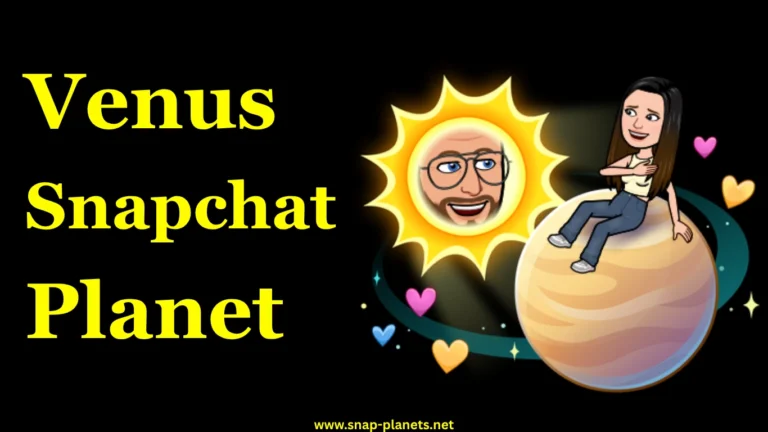
| Venus | #2 | Very close — second-highest interaction |
| Earth | #3 | Close, balanced — third-highest interaction |
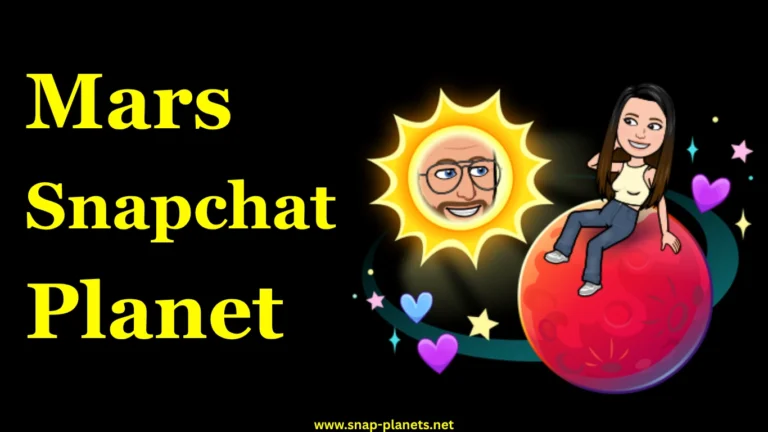
| Mars | #4 | Active, playful connection |
| Jupiter | #5 | Casual, familiar friend |
| Saturn | #6 | Fading or infrequent interaction |
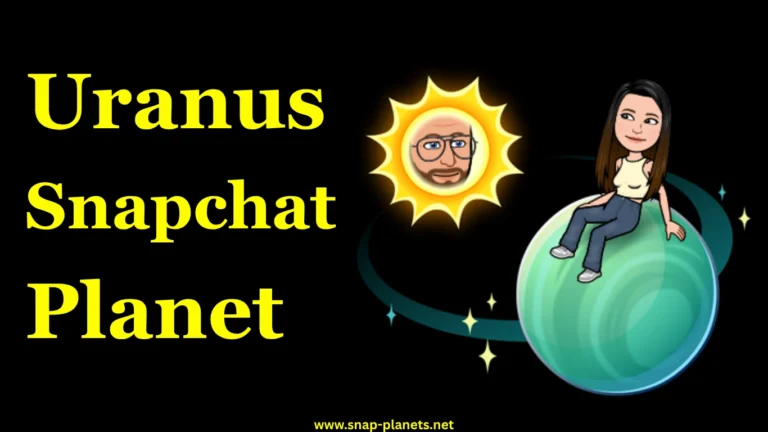
| Uranus | #7 | Rare contact, distant connection |
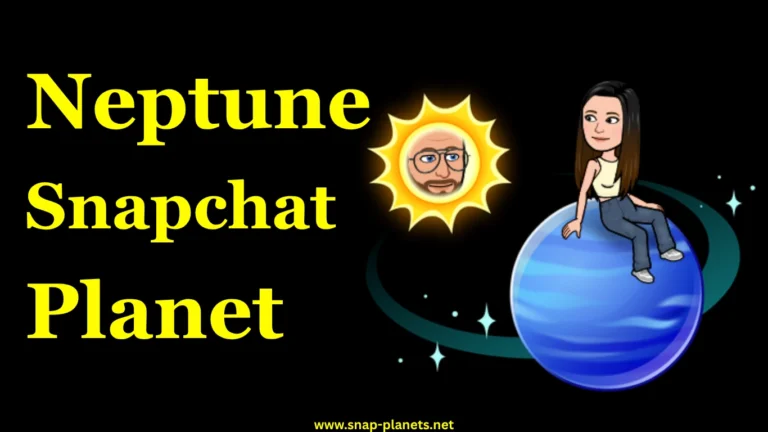
| Neptune | #8 | Minimal interaction, weakest active bond |
Earth sits at the boundary between what users informally call the “inner planets” — Mercury, Venus, and Earth — and the mid-to-outer tier that begins with Mars. Holding the #3 position means this friendship is among your three most active on the entire platform.
What Does the Earth Planet Look Like on Snapchat?
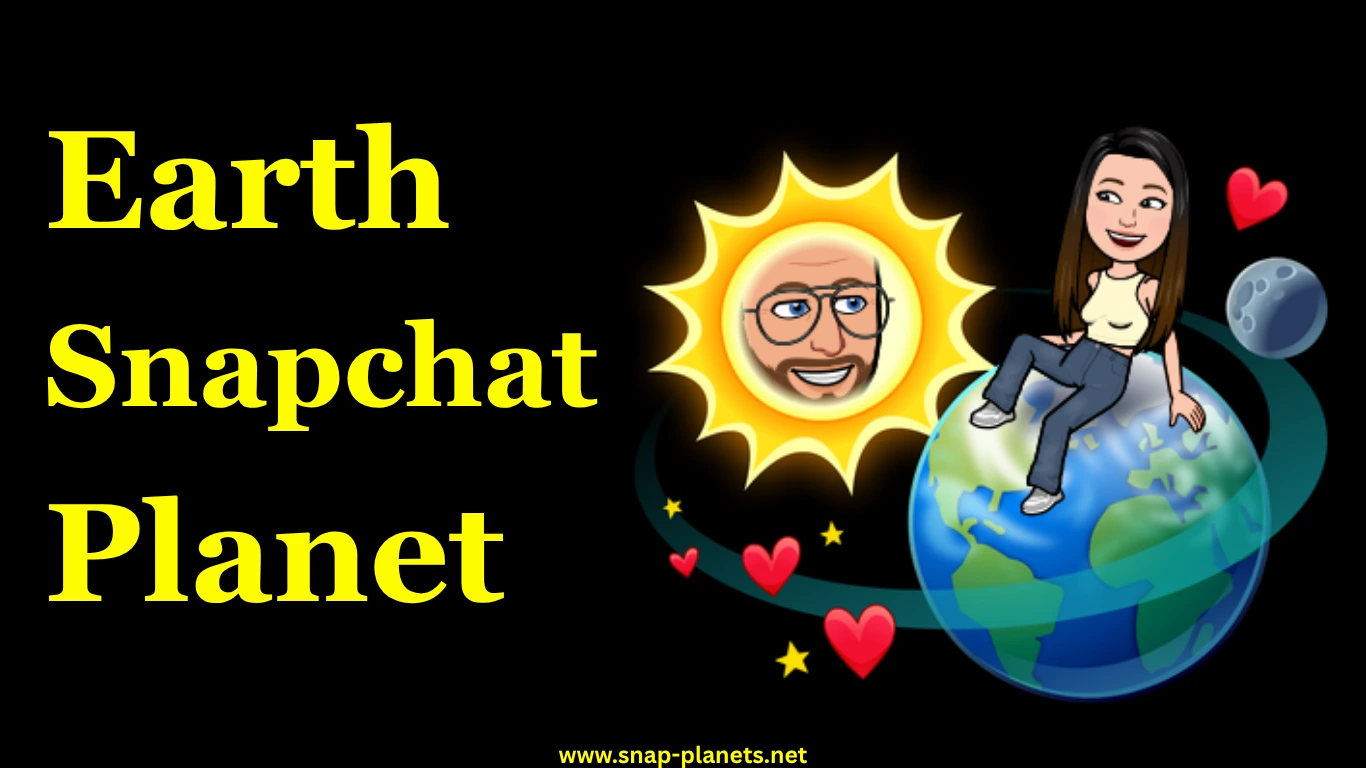
The Earth planet icon in the Friend Solar System has a specific visual design that is both recognizable and distinct from the other seven planets. Several online sources describe Earth’s appearance incorrectly, so the accurate details matter.
Color: Blue and green tones resembling the real Earth — the most geographically accurate-looking planet icon in the entire solar system display
Surrounding elements: Red hearts and small sparkling stars orbiting around the planet
Additional detail: A small grey moon visible near the planet in some display versions
Overall tone: Calm and familiar — visually grounded compared to the warm intensity of Mercury and Venus
Bitmoji presence: In certain display versions, a small Bitmoji character appears near the planet surface
What the Red Hearts and Stars Around Earth Mean
The combination of red hearts and stars around the Earth planet is a specific visual detail that distinguishes it from Venus above and Mars below. Venus uses multicolored hearts. Earth uses red hearts alongside stars. Mars uses stars without hearts.
This design progression is intentional. The presence of red hearts at the Earth level indicates that the friendship still carries a strong emotional engagement signal — this is not a casual, distant connection. The addition of stars alongside the hearts suggests a friendship that is both warm and consistent over time, rather than intensely focused like Mercury or Venus.
As with all planet visuals in the Friend Solar System, these design elements are not a code to be deciphered. They are visual design choices that communicate the general tier of closeness, not specific hidden meanings about the nature of the relationship.
What Does Earth Mean on Snapchat?
Earth on Snapchat means the friend assigned this planet is your number three best friend as determined by Snapchat’s interaction algorithm. Among every person in your friend list, this individual generates the third-highest composite engagement score. They interact with you more frequently than five other recognized friends, sitting just below your Venus and Mercury in the Friend Solar System.
What Earth Communicates About the Friendship
When Earth appears on a friend’s profile, the Friend Solar System is communicating:
- You exchange direct snaps with this person regularly — third most frequently among all your contacts
- Your chat pattern with them is consistent and present, even if slightly less frequent than Mercury and Venus
- You likely share a Snapstreak with this person or maintain regular daily contact
- Your combined engagement across all tracked interaction types ranks third in your entire contact network
What Earth Does Not Mean
Earth does not mean the friendship is average. Third place in a ranking that covers hundreds of contacts is a strong result. Many users misread Earth as a mediocre position because it sits below two others, but the absolute meaning — top three in your network — is significant.
Earth does not mean the friendship is declining. Some users panic when a friend drops from Venus to Earth, interpreting it as a sign of growing distance. Earth can reflect a stable, long-term friendship that simply interacts slightly less frequently than the top two, without any meaningful change in closeness.
Earth does not mean the friendship is one-sided. The algorithm weights two-way interaction, so Earth rank typically reflects mutual engagement. A one-sided friendship where only one person sends snaps would generally score lower than Earth.
Earth is not permanent. Rankings update continuously. An Earth position can move up to Venus or Mercury with increased activity, or drop to Mars or lower if interaction decreases relative to other friends.
How Snapchat Assigns the Earth Rank
The Earth rank is determined through the same algorithmic process that assigns all eight planet positions. Snapchat’s Friend Solar System algorithm collects interaction data across multiple signal types and generates a composite friendship score for every contact. The three friends with the highest scores receive Mercury, Venus, and Earth respectively.
Interaction Signals and Their Weight
| Signal | Weight in Algorithm |
|---|---|
| Direct one-to-one snaps sent and received | Highest |
| Chat message frequency and initiation | High |
| Snapstreak length and daily consistency | Medium-High |
| Reply speed and consistency | Medium |
| Story reactions and replies | Medium |
| Voice and video calls within Snapchat | Medium |
| Group snap and group chat participation | Low |
Direct one-to-one snaps remain the most heavily weighted signal at every planet level. Sending a private snap to one specific person is treated as a more deliberate engagement signal than participating in group chats or posting stories.
Chat initiation matters as much as chat volume. Friendships where both users independently start conversations score higher than those where only one person consistently initiates.
Snapstreaks provide a daily consistency signal. A long-running unbroken streak is a reliable indicator of Earth-tier or higher engagement because it requires daily mutual commitment.
Group interactions contribute minimally. If most of the interaction with a specific friend happens through group snaps or group chats rather than private exchanges, that friendship will score lower regardless of total message volume.
Earth From Both Sides: Understanding the Asymmetry
Planet rankings are calculated independently for each user. Your Earth is determined by your interaction data. Your friend’s Earth is determined by their interaction data. These calculations are completely separate and frequently produce different results.
Common Asymmetry Scenarios for Earth
| Your Planet for Them | Their Planet for You | What It Means |
|---|---|---|
| Earth | Mercury | They interact with you most; you interact with two others more than them |
| Earth | Venus | They are your #2; you are their #3 — very close rankings |
| Earth | Earth | Mutual #3 — balanced reciprocal engagement |
| Earth | Mars | You are their #3; they are your #4 — slight activity difference |
| Venus | Earth | You are their #2; they are your #3 — minor gap |
None of these combinations indicates a problematic friendship. They reflect the reality that both people have different overall social networks, with varying levels of activity across different contacts.
Best Friends Badge vs Friends Badge
Gold-outlined Best Friends Badge: You are both in each other’s top eight friends. Tapping this and seeing Earth means you hold the #3 position in their Friend Solar System while they are also somewhere in your top eight.
Friends Badge (no gold outline): You are in their top eight but they are not currently in yours. Tapping this and seeing Earth means you are their #3 friend, but the placement is not reciprocal at the solar system level.
How to Get Earth Rank on Snapchat
Earning Earth rank requires building the third-highest interaction score among all of someone’s Snapchat contacts. Since this is a relative ranking, you are competing against the interaction frequency of their other friends rather than against a fixed score threshold.
Strategies to Earn and Hold Earth Rank
Send Direct Snaps Consistently Daily or near-daily one-to-one snaps are the foundation of any inner-planet ranking including Earth. Consistency over several weeks matters more than high-volume bursts of activity in a short period. Even simple, casual snaps sent every day create a stronger sustained signal than ten snaps sent once a week.
Maintain an Active Snapstreak A Snapstreak running for 30 days or more creates a reliable daily engagement signal. Earth-tier friendships typically involve an active streak. Use Snapchat’s built-in streak reminders to prevent accidental breaks, because a broken streak removes a significant portion of your daily engagement signal immediately.
Initiate Chat Conversations Regularly Do not only respond to messages — start conversations yourself. The algorithm distinguishes between two-way initiation patterns and one-sided interaction. Friendships where both users independently start conversations score higher than those where only one person drives engagement.
Reply Consistently and Promptly Reliable replies signal that this friendship is a communication priority. While reply speed is not the most heavily weighted factor, consistent timely responses across weeks and months contribute meaningfully to the overall engagement score.
Engage With Their Stories React to their stories with emoji responses or text replies regularly. Every story reaction generates an interaction event. Regular story engagement across several weeks creates a cumulative contribution that supports Earth-tier and higher rankings.
Use Video Snaps Periodically Video snaps carry more algorithmic weight than photo snaps. Mixing video messages into your regular snap habit creates stronger per-interaction signals and can help maintain or strengthen an Earth rank position.
How to Move From Earth to Venus or Mercury
Moving from Earth up to Venus or Mercury is achievable but requires a noticeable and sustained increase in interaction frequency — specifically enough to surpass the current Venus or Mercury-ranked friend’s score.
What the Jump From Earth to Venus Requires
- Increase your daily direct snap frequency so it consistently exceeds your current Venus-ranked friend’s snap frequency with that person
- Build or extend a Snapstreak that runs without breaks
- Increase chat initiation — start conversations more often rather than only responding
- Maintain consistent story engagement alongside direct snap increases
The jump from Earth to Venus is generally easier to achieve than the jump from Venus to Mercury, because the score difference between #3 and #2 is typically smaller than the gap between #2 and #1 in most users’ active friend networks.
What the Jump From Earth to Mercury Requires
Moving directly from Earth to Mercury — skipping Venus entirely — is possible but requires overtaking both the current Venus and Mercury-ranked friends in interaction score simultaneously. This typically happens when both those friendships experience reduced activity at the same time as your activity increases significantly, or when you are newly building a friendship that has not previously been ranked at all.
Why Earth Rank Drops
Another Friend Becomes More Active The most common cause of dropping from Earth. If you begin snapping someone new frequently, or if an existing friend’s interaction increases sharply, their score can surpass yours within one recalculation cycle.
Activity Decreases During a Busy Period Short-term drops in snapping during travel, exams, work deadlines, or illness can be enough to shift rank. The algorithm uses recent interaction data, so temporary activity decreases have faster consequences than many users expect.
A Streak Breaks Losing a Snapstreak removes a consistent daily engagement signal. If the streak was a significant factor in maintaining Earth position, its absence can cause a rank drop within days of the break.
Algorithm Recalibration Snapchat periodically adjusts how it weights different interaction signals. Changes in weighting can shift planet positions simultaneously across multiple friendships without any change in user behavior.
Earth vs Other Snapchat Planets: Full Comparison
| Planet | Rank | Snap Frequency | Streak Active | Chat Pattern | Story Engagement |
|---|---|---|---|---|---|
| Mercury | #1 | Daily | Yes, long | Regular two-way | Consistent |
| Venus | #2 | Very frequent | Yes, active | Frequent | Regular |
| Earth | #3 | Several times a week | Usually yes | Occasional two-way | Occasional |
| Mars | #4 | Few times a week | Sometimes | Light | Occasional |
| Jupiter | #5 | Once a week or less | Rarely | Infrequent | Rare |
| Saturn | #6 | Occasional | No | Rare | Minimal |
| Uranus | #7 | Rare | No | Very rare | Almost none |
| Neptune | #8 | Almost never | No | Barely any | None |
Earth vs Mercury: Key Difference
Mercury requires the highest interaction score of all contacts — typically daily snaps, long streaks, and regular two-way chat initiation. Earth reflects slightly less frequency: snapping several times a week rather than every day, with a still-active streak and occasional chat exchanges. The difference is one of consistency and volume, not of type.
Earth vs Mars: Key Difference
Earth and Mars are often confused because both represent active friendships below the top two. The distinction is that Earth reflects a more consistent, higher-frequency interaction pattern — snapping several times a week with story engagement — while Mars reflects a slightly more sporadic pattern, with less regular chat and fewer sustained engagement signals.
Earth vs Neptune: The Full Range
Comparing Earth to Neptune illustrates the full spectrum of the Friend Solar System. Earth represents several-times-weekly direct engagement, an active streak, and regular two-way interaction. Neptune represents a friend you barely interact with on the platform — rare snaps, almost no chat, and minimal story engagement. The same friend can shift between these positions over months depending entirely on how interaction patterns change.
Common Misconceptions About the Earth Snapchat Planet
“Earth means the friendship is average”
Earth is the #3 position in a ranking that covers your entire contact network. Being ranked third in your social network on any platform is not average — it is a strong result that reflects consistent, active engagement.
“Earth updates instantly”
Planet rankings do not update in real time. Snapchat recalculates positions on a rolling basis, and changes typically become visible over a window of several days. A sudden increase in snapping with someone will not immediately move them from Mars to Earth — the shift reflects in the ranking after the algorithm’s next recalculation.
“Earth means the person likes you more”
Earth reflects interaction frequency, not personal feelings. Someone can be assigned Earth based entirely on consistent casual snapping — daily check-ins, meme sharing, or streak maintenance — without any deeper emotional significance.
“You need to snap every day to hold Earth”
Daily snapping is ideal for Mercury and Venus, but Earth rank can be maintained with slightly less frequency — several times per week — combined with consistent streak maintenance and regular story engagement. The key is sustained consistency, not necessarily daily contact.
Privacy: Who Can See Your Earth Planet
Like all planet positions in the Friend Solar System, Earth status is private by design.
- Only you can see which friend holds the Earth position in your solar system
- Your Earth-ranked friend cannot automatically see their own position in your solar system
- No followers, mutual friends, or other contacts can see any part of your Friend Solar System
- Snapchat does not send any notification when planet positions change
This means any social pressure around Earth rankings is self-generated. No one automatically knows what planet they are in your solar system unless you choose to show or tell them directly.
Disabling the Feature
The Friend Solar System can be turned off at any time. Open Snapchat, tap your Bitmoji icon, open the Snapchat Plus panel, navigate to Manage Features, and toggle Friend Solar System off. All planet badges disappear from profiles when disabled and rankings restore based on current data when re-enabled.
Is Earth Available Without Snapchat Plus?
No. The Earth planet and the entire Friend Solar System are exclusively available to active Snapchat Plus subscribers. The free version of Snapchat does not include planet badges, solar system views, or any planet-based friendship rankings.
Snapchat occasionally offers a free trial for new subscribers. During the trial period, all Snapchat Plus features including Earth and the complete Friend Solar System are accessible. A paid subscription is required once the trial ends.
Conclusion
The Earth Snapchat planet is the third-highest rank in the Friend Solar System — a position that places a friend in your top three most active connections on the platform. It is assigned to the friend whose composite interaction score ranks third among all your contacts, reflecting consistent direct snaps, regular chat engagement, an active Snapstreak, and steady story interactions.
Earth is not a mediocre position. It is not a sign of a declining friendship. And it is not permanent — the ranking updates continuously as interaction patterns change. Understanding Earth accurately means reading it for what it is: a real-time snapshot of your third-most-active digital friendship, visible only to you, and fully within your control to improve through consistent daily engagement.
Frequently Asked Questions About Earth on Snapchat
What does Earth mean on Snapchat?
Earth on Snapchat means the person assigned this planet is your number three best friend in the Friend Solar System. They generate the third-highest composite interaction score among all your Snapchat contacts.
What does the Earth planet look like on Snapchat?
Earth appears as a blue and green planet resembling the real Earth, surrounded by red hearts and small sparkling stars, with a small grey moon visible in some display versions. It is visually calmer and more grounded than Mercury and Venus.
Is Earth a good rank on Snapchat?
Yes. Earth is the #3 position in a ranking system that covers your entire contact network. Being in the top three among all your friends on Snapchat is a strong result that reflects consistent, active engagement.
Can Earth move up to Mercury?
Yes. Increasing your direct snap frequency, maintaining a longer streak, and initiating more chat conversations can eventually move Earth up to Venus and then to Mercury if your interaction score surpasses the current holders of those positions.
Why am I Earth for someone but they are Venus for me?
Planet positions are calculated independently for each user. You can be someone’s #3 friend while they are your #2 because both rankings reflect your individual interaction data separately. This is normal and expected in the Friend Solar System.
Why did my Earth rank drop to Mars?
Common reasons include: another friend became more active and surpassed your score, your interaction with that person decreased temporarily, a Snapstreak broke, or Snapchat recalibrated its algorithm.
Does Earth mean the friendship is declining?
Not necessarily. Earth can reflect a stable, long-term friendship that interacts at a consistent moderate frequency. A move from Venus to Earth typically indicates a slight drop in relative interaction frequency, not a decline in the friendship itself.
How often does Earth rank update?
Planet rankings update periodically based on rolling interaction data. Position changes generally become visible within a window of several days rather than in real time.