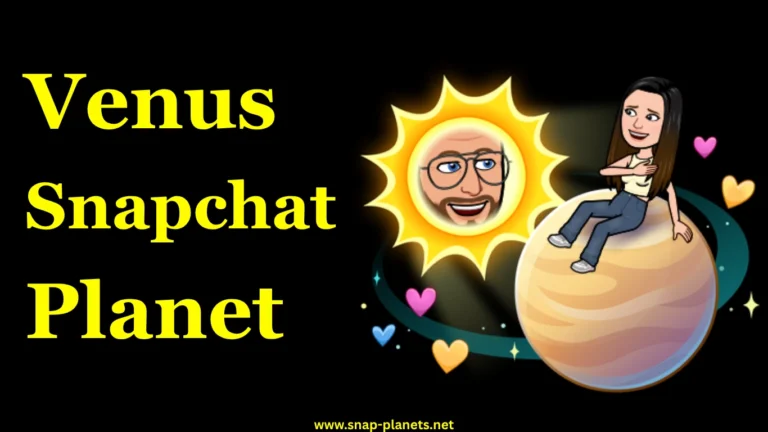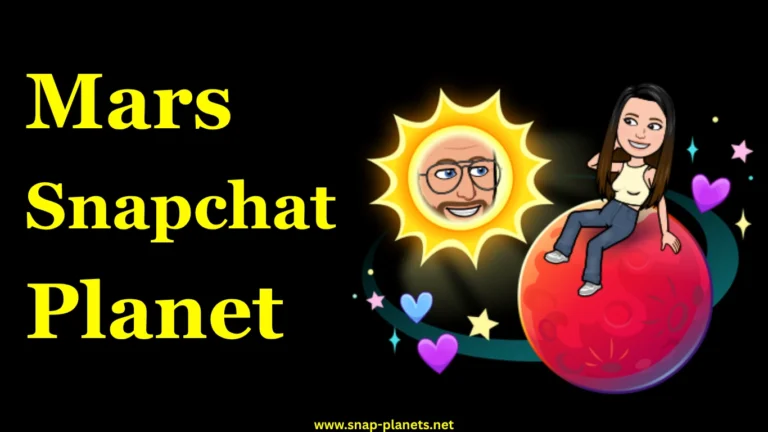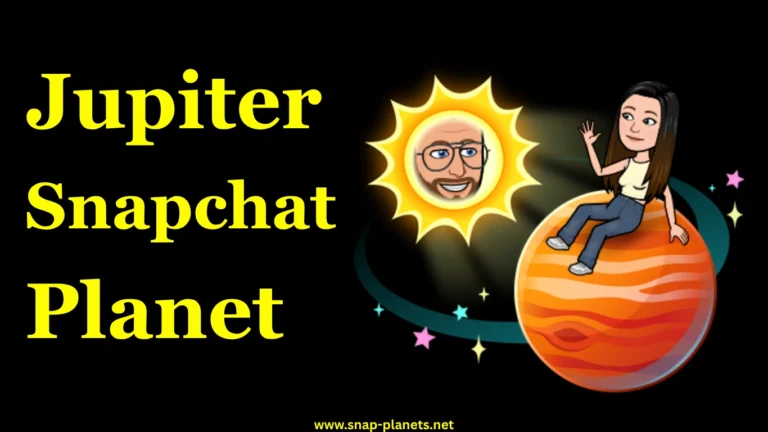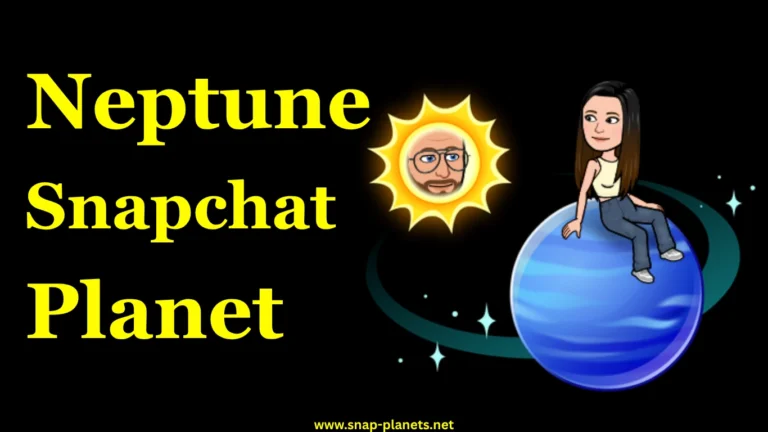
Of all eight planets in the Snapchat Friend Solar System, Saturn is arguably the most misread. Users who see it on a friend’s profile often assume it signals something negative — a fading friendship, low interest, or a relationship on the decline. In reality, Saturn on Snapchat tells a more nuanced story than most users realize.
The Saturn Snapchat planet is the #6 position in the Friend Solar System. It represents a friend who still ranks within your top eight contacts by interaction frequency — meaning they interact with you more than the majority of people in your network. What Saturn actually reflects is a friendship that was once more active, or one that has settled into an infrequent but still recognized pattern of contact. The interaction is real, but it is no longer consistent enough to hold an inner-planet position.
This guide covers everything about the Saturn Snapchat planet: what it means, what it looks like, how the algorithm assigns it, what separates Saturn from Jupiter above and Uranus below, and what specific behaviors determine whether a friendship moves toward the inner planets or drifts further toward Neptune.
What Is the Saturn Planet on Snapchat?
The Saturn Snapchat planet is the #6 position in the Friend Solar System — an exclusive Snapchat Plus feature that visually maps your eight closest friendships as planets orbiting around you as the Sun. Saturn is assigned to the friend who generates the sixth-highest composite interaction score based on all measurable engagement signals Snapchat tracks across a recent rolling time window.
Just as Saturn is the sixth planet from the Sun in real astronomy, the Saturn-ranked friend on Snapchat is your sixth closest digital connection. They still rank within your top eight — which means they interact with you more than the majority of your contacts — but their engagement frequency falls below the five friends assigned to Mercury, Venus, Earth, Mars, and Jupiter.
The Saturn rank is determined entirely by digital behavior within the app — how often you send direct snaps, how frequently you chat, whether a streak is active, and how consistently you engage across all tracked interaction types. It is not determined by how long you have known someone or by any emotional measure of the friendship.
Where Saturn Sits in the Snapchat Planet Order
The Friend Solar System follows the exact sequence of the real solar system. Saturn occupies the sixth position — directly below Jupiter and directly above Uranus.
| Planet | Rank | Friendship Tier |
|---|---|---|
| Mercury | #1 | Closest best friend — highest interaction |
| Venus | #2 | Very close — second-highest interaction |
| Earth | #3 | Close, balanced — third-highest interaction |
| Mars | #4 | Active connection — fourth-highest interaction |
| Jupiter | #5 | Casual, familiar — fifth-highest interaction |
| Saturn | #6 | Infrequent — sixth-highest interaction |
| Uranus | #7 | Rare contact, distant connection |
| Neptune | #8 | Minimal interaction, weakest active bond |
Saturn sits in the outer tier of the Friend Solar System alongside Uranus and Neptune. These three positions share a common characteristic: interaction has become genuinely infrequent rather than just moderately reduced. The gap between Jupiter (#5) and Saturn (#6) is often more significant than gaps between adjacent inner planets, because it reflects a real shift from regular engagement to occasional contact.
What Does the Saturn Planet Look Like on Snapchat?
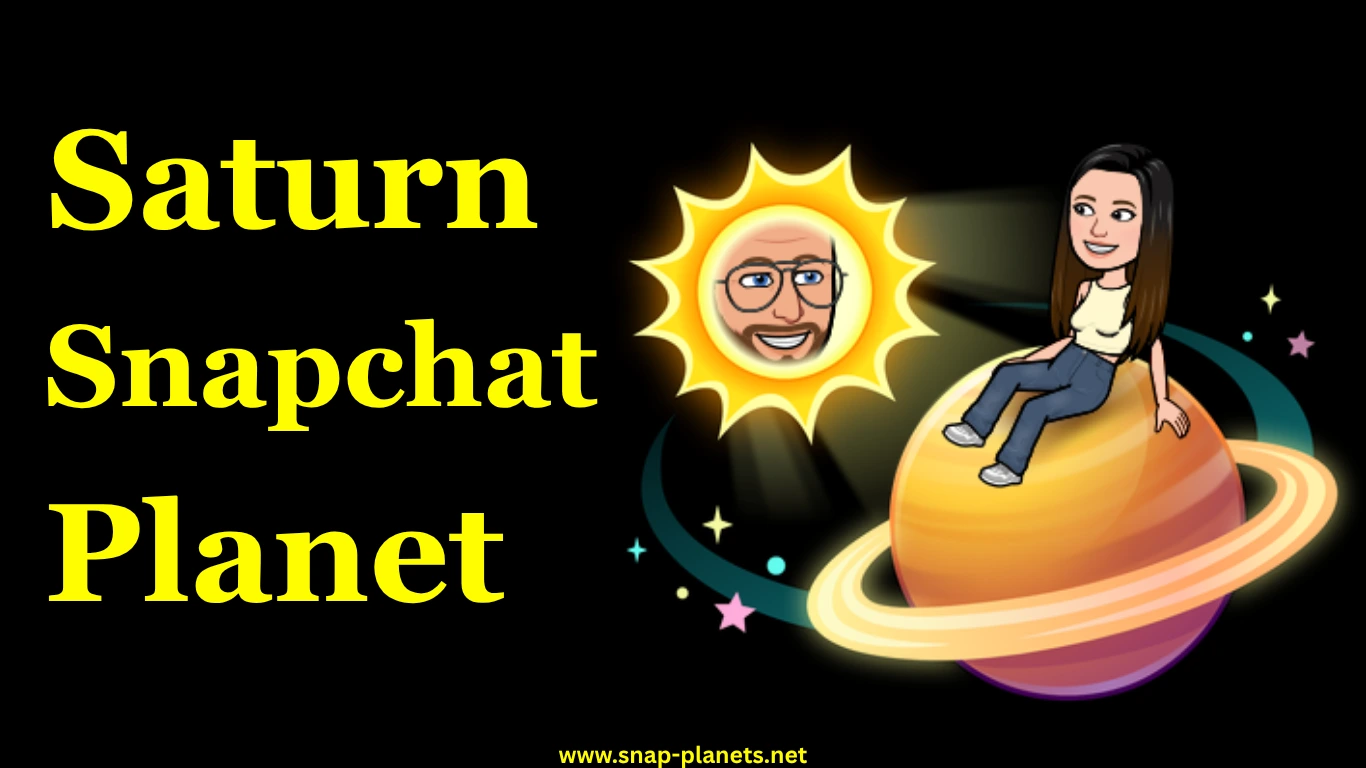
The Saturn planet icon is one of the most visually distinctive in the entire Friend Solar System, and its design borrows directly from real-world astronomy in a way no other planet icon does.
Color: Pale yellow or soft golden tone — more muted and subdued than Jupiter’s warm orange
Defining feature: Wide, prominent rings surrounding the planet — the most visually distinctive ring system of any planet in the solar system display
Surrounding elements: Dimmed stars with a softer glow than Jupiter’s stars — the sparkle is noticeably less bright
Overall tone: Quiet and restrained — the visual design deliberately communicates a reduced level of activity compared to the inner planets
Bitmoji presence: In certain display versions, a small Bitmoji character appears near the planet, often positioned smaller or more to the side than in inner-planet displays
Saturn’s Rings: What They Actually Represent
Saturn’s rings are its most recognizable feature both in real astronomy and in Snapchat’s visual design. Within the Friend Solar System, the rings are a design choice — they make Saturn immediately identifiable and give it a visual distinctiveness that reflects its unique position in the ranking structure.
The rings do not encode specific information about the friendship. They are not wider when interaction is stronger or narrower when it is weaker. They are a consistent visual feature of the Saturn icon that serves to identify the sixth position clearly, nothing more.
The Visual Tone Shift at Saturn
By Saturn, the visual design language of the Friend Solar System has shifted significantly from the inner planets. The progression from Mercury to Saturn tells a clear visual story:
| Planet | Hearts | Stars | Overall Brightness | Ring Detail |
|---|---|---|---|---|
| Mercury | Red hearts | Bright | High — glowing halo | None |
| Venus | Multicolor hearts | Bright | High — shimmer | None |
| Earth | Red hearts | Present | Medium-high | None |
| Mars | Small hearts | Present | Medium | None |
| Jupiter | None | Present | Medium | Soft beige rings |
| Saturn | None | Dimmed | Low-medium | Wide prominent rings |
| Uranus | None | Faint | Low | Thin rings |
| Neptune | None | Minimal | Very low | Subtle glow only |
Saturn is the point where both hearts and bright star energy have disappeared from the design. What remains is a muted, ringed planet with dimmed stars — a visual that accurately reflects the reduced interaction intensity the algorithm is detecting at this tier.
What Does Saturn Mean on Snapchat?
Saturn on Snapchat means the friend assigned this planet is your number six best friend as determined by Snapchat’s interaction algorithm. Among every person in your friend list, this individual generates the sixth-highest composite engagement score. They still rank within your top eight — but their interaction frequency falls noticeably below your top five contacts.
What Saturn Communicates About the Friendship
When Saturn appears on a friend’s profile, the Friend Solar System is communicating:
- Direct snaps between you and this person happen occasionally — not on a predictable weekly schedule
- Chat exchanges are infrequent — conversations happen sometimes but without regularity
- No active Snapstreak is likely maintained with this person
- Story engagement is minimal — occasional reactions but not consistent
- The combined engagement score ranks sixth, meaning most of your contacts interact with you less than this person, but five interact more
What Saturn Does Not Mean
Saturn does not mean the friendship is over. A friend can hold Saturn rank stably for months or even years. Saturn reflects infrequent interaction on Snapchat specifically — it says nothing about the real-life quality or importance of the relationship.
Saturn does not mean the person is ignoring you. Many Saturn-tier friendships involve people who are active in real life but simply do not use Snapchat as a primary communication channel. Their Saturn rank reflects the platform’s data, not their personal investment in the friendship.
Saturn does not mean you should reach out less. Some users interpret Saturn as a sign that they should reduce contact. The opposite is usually true — if you want to improve the friendship’s digital rank, the solution is more engagement, not less.
Saturn does not mean the friendship has no value. Being ranked #6 among all your contacts still means this person interacts with you more than the majority of people in your Snapchat network. The absolute position matters as much as the relative one.
Saturn is not permanent. Rankings update continuously. A Saturn position can move up toward Jupiter and the inner planets with increased consistent activity, or drop further toward Uranus and Neptune if interaction decreases.
How Snapchat Assigns the Saturn Rank
The Saturn rank is determined through the same algorithmic process that assigns all eight planet positions. Snapchat’s Friend Solar System algorithm collects interaction data across multiple signal types and generates a composite friendship score for every contact. The friend with the sixth-highest score receives Saturn.
Interaction Signals and Their Weight
| Signal | Weight in Algorithm |
|---|---|
| Direct one-to-one snaps sent and received | Highest |
| Chat message frequency and initiation | High |
| Snapstreak length and daily consistency | Medium-High |
| Reply speed and consistency | Medium |
| Story reactions and replies | Medium |
| Voice and video calls within Snapchat | Medium |
| Group snap and group chat participation | Low |
At the Saturn tier, the most common pattern is a friendship where direct snaps happen occasionally rather than on any predictable schedule, chat exchanges are sporadic rather than consistent, no active Snapstreak exists, and story engagement is minimal. The friend is still recognized within the top eight — meaning some level of interaction is happening — but the signals are weak enough relative to others that they fall to the sixth position.
An important nuance about Saturn: some Saturn-tier friendships reflect not a naturally low-engagement friendship but a once-active friendship that has cooled. A friend who was previously Earth or Mars but has gradually interacted less frequently over weeks or months can slide through Jupiter and settle at Saturn. The rank reflects current activity patterns, not historical closeness.
Saturn From Both Sides: The Asymmetry
Planet rankings are calculated independently for each user. Your Saturn is determined by your interaction data. Your friend’s Saturn is determined by their own data. These calculations are completely separate and regularly produce different results.
Common Asymmetry Scenarios for Saturn
| Your Planet for Them | Their Planet for You | What It Means |
|---|---|---|
| Saturn | Mercury | They interact with you most; you interact with five others more than them |
| Saturn | Jupiter | You are their #5; they are your #6 — small activity gap |
| Saturn | Saturn | Mutual #6 — balanced reciprocal low-frequency engagement |
| Saturn | Uranus | You are their #7; they are your #6 — they interact with you slightly more |
| Jupiter | Saturn | You are their #6; they are your #5 — minor gap, achievable to close |
Best Friends Badge vs Friends Badge for Saturn
Gold-outlined Best Friends Badge: You are both in each other’s top eight friends. Tapping this and seeing Saturn means you hold the #6 position in their Friend Solar System while they are also somewhere in your top eight.
Friends Badge (no gold outline): You are in their top eight but they are not currently in yours. Tapping this and seeing Saturn means you are their #6 friend, but the placement is not reciprocal at the solar system level.
No badge visible: One or both users does not have an active Snapchat Plus subscription, or the Friend Solar System feature has been disabled in settings.
How to Improve From Saturn Rank
Moving from Saturn upward requires rebuilding interaction frequency that has either never been high or has declined from a previous level. The approach depends on which of these two situations applies.
If Saturn Reflects a New or Low-Activity Friendship
For friendships that have always been at a low engagement level, the path to improvement is straightforward: increase direct snap frequency, initiate chat conversations more regularly, and consider building a Snapstreak to create a daily engagement signal.
Practical starting point:
- Send one direct snap per day for two weeks — this alone creates a streak and a strong daily signal
- Reply to their stories at least twice a week to add interaction variety
- Start one chat conversation per week independently rather than only responding
Within two to three weeks of consistent behavior at this level, most Saturn-tier friendships will move toward Jupiter or Mars.
If Saturn Reflects a Previously Closer Friendship That Has Cooled
For friendships that were once at Earth, Mars, or Jupiter but have drifted to Saturn, recovery requires a deliberate return to the engagement habits that originally held the higher position.
- Restart a Snapstreak if one previously existed — the first few days require mutual daily snaps
- Increase chat initiation to signal renewed investment
- Engage with their stories regularly to generate quick interaction events
- Use video snaps rather than photo snaps when restarting engagement, as video carries higher per-interaction weight
The timeline for moving from Saturn back to a previously held position is generally faster than building from scratch, because the algorithm recognizes the history of interaction signals even as recent activity is weighted more heavily.
Moving From Saturn All the Way to Inner Planets
Moving from Saturn (#6) to the inner planets — Earth (#3) or higher — requires sustained daily-level engagement over several weeks. This means:
- Daily direct snaps with no gaps
- Active Snapstreak maintained consistently
- Regular two-way chat initiation
- Consistent story engagement
This is a meaningful behavioral commitment, but it is achievable for any friendship where both parties are willing to engage more actively on the platform.
Why Saturn Rank Drops to Uranus or Lower
Extended Periods of Reduced Activity Even a friend who was consistently at Jupiter can drift to Saturn over several weeks of reduced snapping. The algorithm uses recent interaction data, so gradual declines in frequency accumulate into a ranking shift over time.
Another Friend Becoming More Active If a new or existing friend begins interacting with the Saturn-ranked person more frequently than you, their score surpasses yours and pushes them up while your relative position drops.
No Streak to Anchor the Score Without a Snapstreak providing a daily signal, Saturn-tier friendships have no consistent anchor in the algorithm. Occasional snaps without the streak structure are more vulnerable to rank drops than streak-supported engagement.
Algorithm Recalibration Snapchat periodically adjusts how it weights different interaction signals. These adjustments can shift multiple planet positions simultaneously without any change in user behavior.
Saturn vs Other Snapchat Planets: Full Comparison
| Planet | Rank | Snap Frequency | Streak Active | Chat Pattern | Story Engagement |
|---|---|---|---|---|---|
| Mercury | #1 | Daily | Yes, long | Regular two-way | Consistent |
| Venus | #2 | Very frequent | Yes, active | Frequent | Regular |
| Earth | #3 | Several times a week | Usually yes | Occasional two-way | Occasional |
| Mars | #4 | Few times a week | Sometimes | Light, periodic | Occasional |
| Jupiter | #5 | Once or twice a week | Rarely | Infrequent | Rare |
| Saturn | #6 | Occasional, no schedule | No | Sporadic | Minimal |
| Uranus | #7 | Rare | No | Very rare | Almost none |
| Neptune | #8 | Almost never | No | Barely any | None |
Saturn vs Jupiter: The Key Difference
Jupiter (#5) reflects once or twice weekly snapping with rarely an active streak and infrequent chat. Saturn (#6) reflects occasional snapping without any predictable schedule, no active streak, and sporadic conversation. The gap between these two positions is meaningful — Jupiter still represents some regularity, while Saturn represents genuinely occasional contact.
Saturn vs Uranus: What Keeps Saturn Higher
Uranus (#7) reflects rare contact — snaps happen only occasionally and conversations are almost nonexistent. Saturn stays above Uranus because it still involves some recognizable interaction events, even if infrequent. The difference between Saturn and Uranus is often a matter of whether the friend shows up in your interaction data at all in a given week.
Saturn vs Neptune: The Outer Range
Neptune (#8) represents almost no interaction — rare snaps, barely any chat, and no story engagement. Saturn is meaningfully more engaged than Neptune. The same friend can occupy any position between Saturn and Neptune depending on how their interaction patterns shift over weeks and months.
Common Misconceptions About the Saturn Snapchat Planet
“Saturn means the friendship is failing”
Saturn reflects current interaction frequency on Snapchat, not the health of the friendship. A genuine close friendship can hold Saturn rank simply because both people interact more frequently with others on the platform or communicate primarily through other channels.
“Saturn means the person is ignoring you”
Saturn is a frequency metric. A person can be assigned Saturn while actively enjoying the friendship in real life — they simply do not snap or chat on Snapchat as frequently as five other contacts do. Ignoring and infrequent snapping are not the same thing.
“Saturn updates immediately when you send snaps”
Planet rankings do not update in real time. Snapchat recalculates positions on a rolling basis, and changes typically become visible over a window of several days. A burst of daily snapping will not move someone from Saturn to Jupiter overnight.
“The rings on Saturn’s icon get wider when you interact more”
The rings on the Saturn icon are a fixed design element. They do not change size, brightness, or shape based on interaction frequency. They are a consistent visual feature that identifies the sixth planet position.
“Saturn is the same as the Saturn student planner app”
The Saturn app is an entirely separate product — a student scheduling and class planner with no connection to Snapchat. Searching for Saturn in the context of Snapchat planets and landing on information about the student planner app is a common confusion that leads nowhere relevant. The two products share only a name.
Privacy: Who Can See Your Saturn Planet
Like all planet positions in the Friend Solar System, Saturn status is private by design.
- Only you can see which friend holds the Saturn position in your solar system
- Your Saturn-ranked friend cannot automatically see their own position in your solar system
- No followers, mutual friends, or other contacts can see any part of your Friend Solar System
- Snapchat does not send any notification when planet positions change
This means that a friend assigned Saturn has no automatic way of knowing their position unless you choose to show or tell them directly.
Disabling the Feature
The Friend Solar System can be turned off at any time. Open Snapchat, tap your Bitmoji icon, open the Snapchat Plus panel, navigate to Manage Features, and toggle Friend Solar System off. All planet badges disappear from profiles when disabled and rankings restore based on current data when re-enabled.
Is Saturn Available Without Snapchat Plus?
No. The Saturn planet and the entire Friend Solar System are exclusively available to active Snapchat Plus subscribers. The standard free version of Snapchat does not include planet badges, solar system views, or any planet-based friendship rankings.
Snapchat occasionally offers a free trial for new subscribers. During the trial period, all Snapchat Plus features including Saturn and the complete Friend Solar System are accessible. A paid subscription is required once the trial ends.
Conclusion
The Saturn Snapchat planet is the sixth position in the Friend Solar System — a rank in the outer tier that reflects occasional, infrequent interaction rather than the regular or daily engagement of the inner planets. It is assigned to the friend whose composite interaction score ranks sixth among all contacts, meaning real engagement exists but lacks the consistency that holds higher planet positions.
Saturn is not a negative verdict on a friendship. It is a real-time snapshot of current digital interaction frequency on Snapchat — one that is fully within your control to change. Whether a Saturn position represents a stable low-engagement friendship or a once-closer connection that has drifted, the path upward is the same: consistent direct snaps, rebuilt streaks, and regular chat initiation sustained over several weeks.
Frequently Asked Questions About Saturn on Snapchat
What does Saturn mean on Snapchat?
Saturn on Snapchat means the person assigned this planet is your number six best friend in the Friend Solar System. They generate the sixth-highest composite interaction score among all your Snapchat contacts, reflecting occasional but still recognized engagement.
What does the Saturn planet look like on Snapchat?
Saturn appears as a pale yellow or soft golden planet with wide, prominent rings — the most visually distinctive ring design of any planet in the Friend Solar System. Dimmed stars surround the icon, and the overall visual tone is noticeably quieter and more subdued than the inner planets.
What place is Saturn on Snapchat?
Saturn is in sixth place in the Friend Solar System — directly below Jupiter (#5) and directly above Uranus (#7).
Is Saturn a bad rank on Snapchat?
Saturn reflects the sixth-highest interaction score among all your contacts. While it is in the outer tier, being ranked #6 still means this person interacts with you more than the majority of people in your network. Whether it is a concern depends on whether the position represents a stable low-activity friendship or a previously closer friendship that has drifted.
Can Saturn move up to Jupiter or higher?
Yes. Increasing direct snap frequency, rebuilding a Snapstreak, initiating chat conversations more regularly, and engaging with stories consistently can move a Saturn-ranked friend upward. The pace of improvement depends on how consistently the new engagement pattern is maintained.
Why did my friend drop from Jupiter to Saturn?
Common reasons include: interaction frequency decreased over several weeks, another friend became more active and pushed them down, a Snapstreak broke, or Snapchat recalibrated its algorithm.
Does Saturn mean the friendship is over?
No. Saturn reflects current Snapchat interaction frequency only. Many genuine, valued friendships hold Saturn rank because the people involved communicate primarily through other channels rather than Snapchat.
Why am I Saturn for someone but they are Mercury for me?
Planet positions are calculated independently. You can be someone’s #6 friend while they are your #1 because both rankings reflect individual interaction datasets. You may interact with five other people more frequently than you interact with them, while they interact with you more than anyone else.
How often does Saturn rank update?
Planet rankings update periodically based on rolling interaction data. Position changes generally become visible within a window of several days rather than in real time.